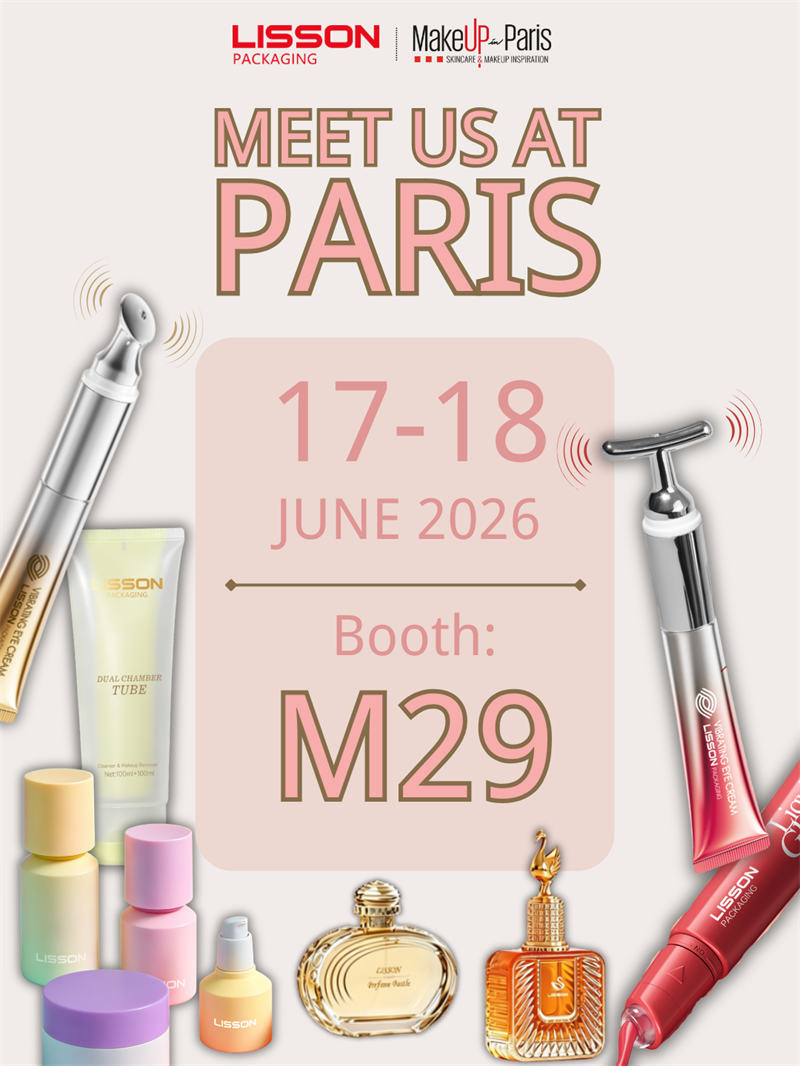
The global beauty and skincare landscape is undergoing a silent revolution, one driven not just by raw chemical formulas, but by the highly engineered vessels that protect and dispense them. At the recent MakeUp in Paris exhibition held on June 17-18, 2026, this critical intersection of cosmetic science, materials engineering, and avant-garde industrial packaging took center stage.
Among the industry pioneers, Lisson Group (Booth: M29) presented a comprehensive masterclass in how modern, vertically integrated manufacturing can elevate cosmetic packaging from a simple container into an active brand differentiator. From agile indie celebrity brands seeking instant visual disruption to legacy skincare pioneers demanding clinical-grade formula protection, the high-level consultations at Booth M29 outlined the definitive technical roadmap for the future of beauty presentation.
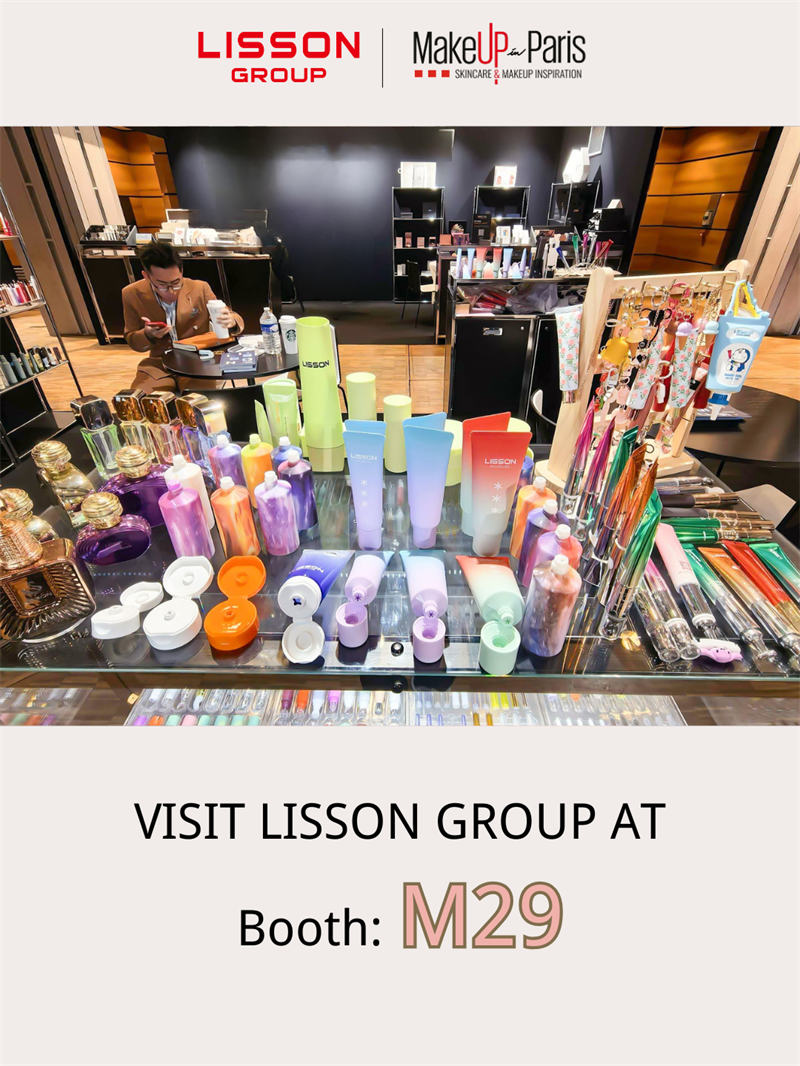
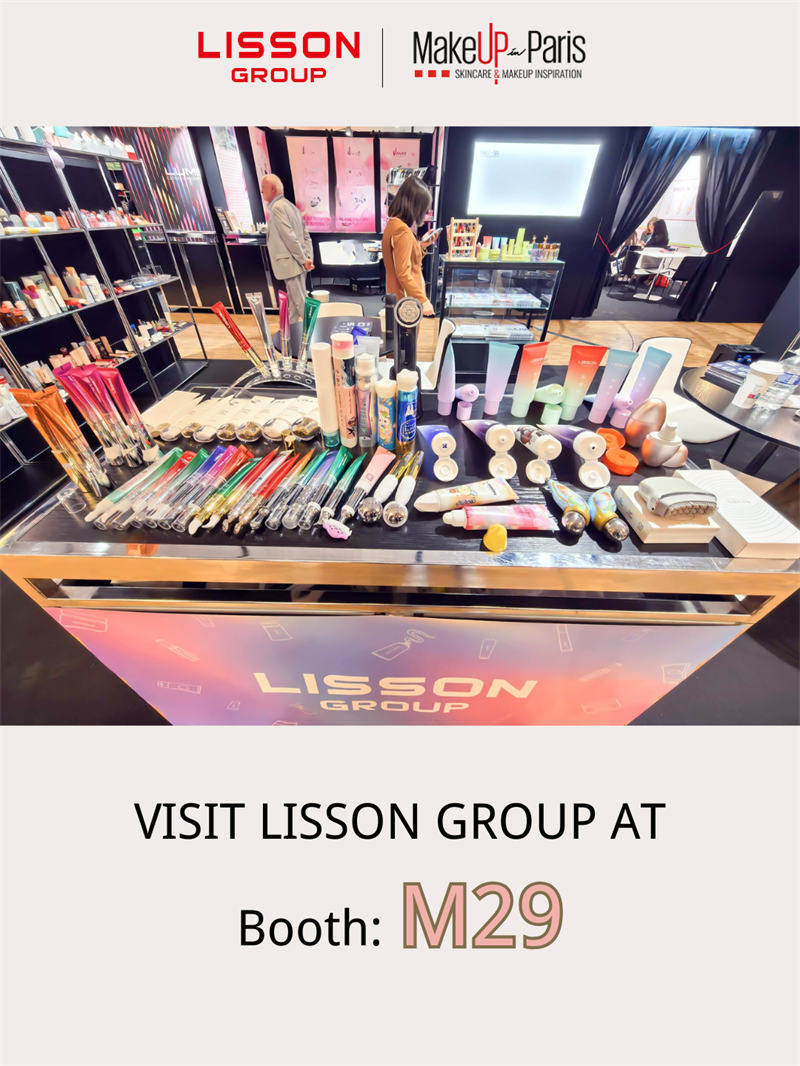
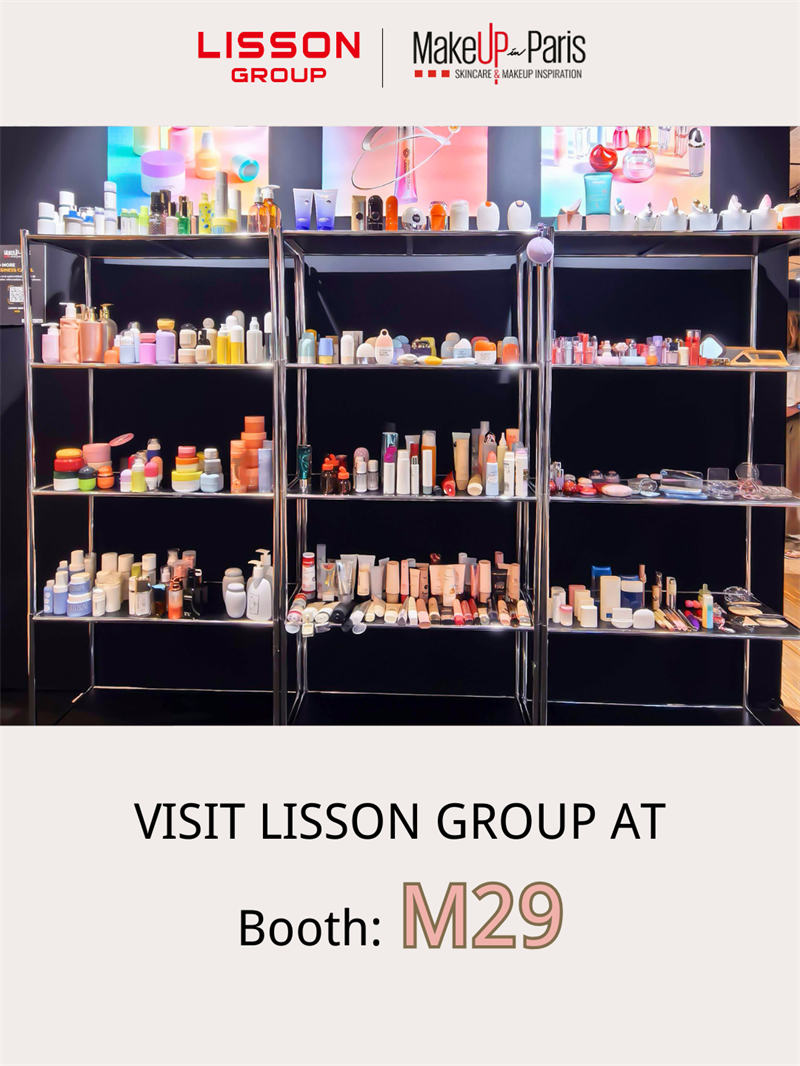
One of the most prominent trends observed at MakeUp in Paris 2026 was the rapid decline of static, passive packaging. Modern consumers demand an elevated, ergonomic application ritual. As showcased on Lisson’s vibrant innovation counters , the market is heavily leaning toward integrated applicator technology that actively enhances formula performance.
Lisson’s premium product lines successfully merge flexible tube packaging with specialized mechanical delivery mechanisms, including:
Zinc-Alloy Massage Rollers: Engineered with premium thermal conductivity, these cold-touch metal rollers stimulate sub-dermal microcirculation during product application, maximizing the absorption of active anti-aging peptides.
Micro-Vibrating Eye Cream Applicators: Utilizing integrated micro-batteries and ultra-precise eccentric rotating mass (ERM) motors, these functional tubes deliver subtle mechanical oscillations to target delicate orbital tissues safely.
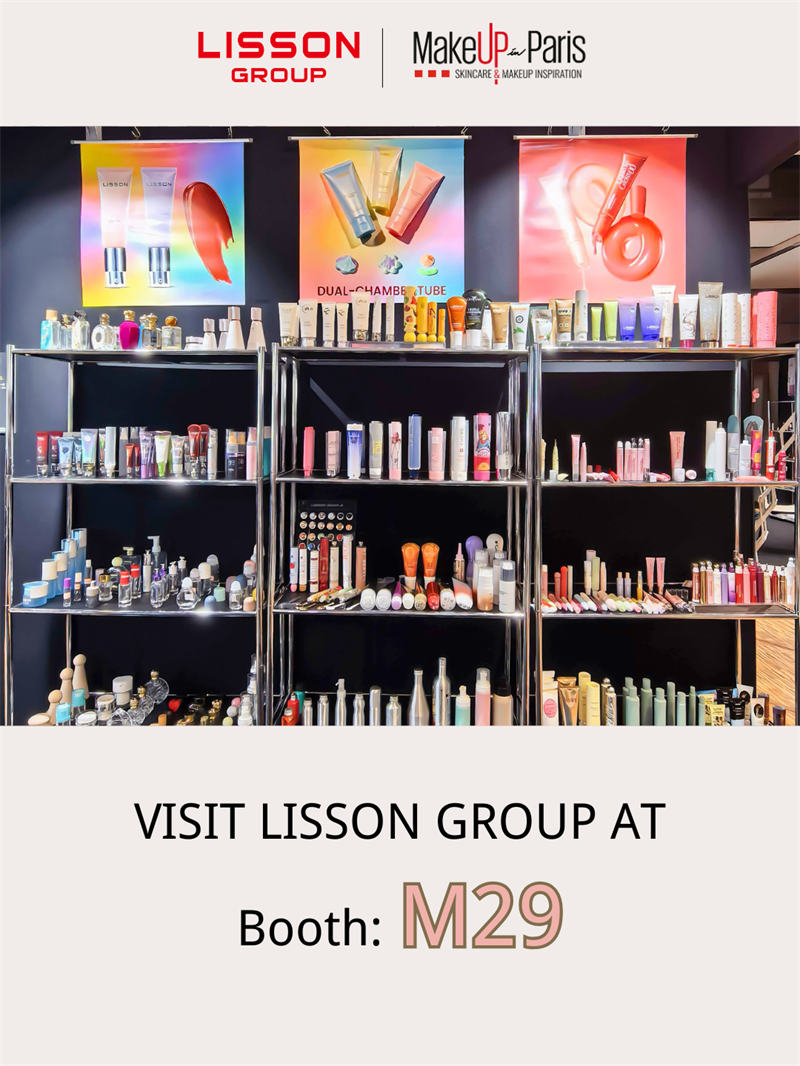
Dual-Chamber Extrusion Tubes: As multi-step skincare routines optimize for efficiency, Dual-Chamber Tubes have emerged as a massive growth sector. By keeping incompatible active ingredients (such as Vitamin C and Retinol) structurally isolated in separate internal reservoirs until the exact moment of extrusion, dual-chamber designs safeguard unstable formula chemistry while providing a high-tech, satisfying visual blending ritual for the end user.
As beauty formulations move toward preservative-free, clean-label, and organic botanical ingredients, the vulnerability of these formulas to atmospheric oxidation, UV degradation, and bacterial contamination increases exponentially. At Booth M29, the technical discourse centered tightly around advanced materials science and barrier properties .
To meet varying brand requirements, Lisson detailed the structural polymer layers that define modern tube manufacturing:
Aluminum Barrier Laminate (ABL): Featuring a micro-thin internal aluminum foil layer sandwiched between polymer sheets, ABL provides an absolute light, gas, and moisture barrier, essential for clinical-grade prescription dermatological creams.
Plastic Barrier Laminate (PBL): Utilizing an advanced Ethylene Vinyl Alcohol (EVOH) resin barrier layer, PBL offers excellent shape-retention memory (preventing tube deformation after squeezing) while allowing for seamless 360-degree high-definition graphic printing.
Sustainable Polyethylene (PE) & PET Options: For brands prioritizing circular economies, Lisson showcased post-consumer recycled (PCR) resins and bio-based sugarcane PE tubes, proving that carbon footprint reduction does not require compromising structural seal integrity.
For fluid skincare products, traditional dip-tube pumps are being replaced by Lisson’s high-performance Airless Bottle Systems. Unlike traditional mechanisms that introduce ambient air into the container as product is drawn out, Lisson’s airless systems utilize a high-precision mechanical piston or an internally collapsing elastomeric pouch. This mechanical design ensures a 99% product evacuation rate (minimizing consumer waste) and seals the premium formulation in a zero-oxygen vacuum state throughout its entire consumer lifecycle.
![]() |
![]() |
![]() |
An exceptional aesthetic design is only as viable as its high-volume supply chain reproducibility. A recurring frustration voiced by fast-growing internet celebrity brands at the exhibition was the critical scaling gap that occurs between a creative 3D design concept and mass-production structural realities.
Lisson’s foundational engineering ecosystem directly bridges this gap. Operating a state-of-the-art 30,000m² industrial manufacturing facility, Lisson seamlessly integrates bottle packaging architecture, custom mold development, high-speed automated injection molding, surface decoration, and international logistics under a unified quality management system.
For professional skincare products demanding absolute hygienic purity, Lisson’s 100,000-grade dust-free workshop enforces rigorous environmental controls. By regulating atmospheric air filtration to ensure fewer than 100,000 microscopic particles per cubic foot, Lisson entirely eliminates the risk of airborne particulates, static dust attraction, or micro-biological contamination during the critical molding and automated assembly phases. This industrial rigor guarantees flawless surface finishes and total regulatory safety compliance across demanding global markets, including Southeast Asia, Europe, and the Americas.
To assist procurement directors, packaging engineers, and brand founders in selecting the optimal technical substrate for upcoming product pipelines, the following matrix details the core capabilities highlighted during the Paris show:
| Packaging Structure | Core Materials Used | Barrier Layer / Valve Mechanism | Primary Target Formulations | Key Structural & Functional Advantages |
| Active Applicator Tubes | Medical-Grade PE, Zinc Alloy, Ceramic, Silicone | Dual-valve non-return dispensing head | Targeted eye serums, localized spot treatments, lip therapies | Delivers localized cryo-therapy; prevents formula back-flow contamination into the tube body. |
| Piston Airless Bottles | PP, PETG, PMMA (Acrylic), PCR Polymers | Mechanical upward-moving internal piston disk | High-viscosity luxury creams, unstable Vitamin C serums | Eliminates internal dip-tubes; allows uniform $360^\circ$ dispensing at any physical holding angle. |
| Dual-Chamber Systems | Co-extruded Co-polymers, High-Flint Glass | Synchronous dual-pump internal chamber linkage | Two-part chemical peeling agents, foundation + primer mixes | Completely isolates reactive ingredients; guarantees exact $1:1$ volumetric dosing ratios. |
| Premium Heavy-Wall Vessels | Ultra-Clear Acrylic, High-Density Glass | High-affinity airtight structural thread sealing liners | Luxury anti-aging balms, overnight hydrating masks, facial oils | Luxury heavy-weight hand-feel; high chemical resistance prevents container etching or degradation. |
![]() |
![]() |
![]() |
For global beauty brands seeking to optimize their product development timelines, here are detailed engineering answers to the critical technical questions analyzed by industry professionals at Booth M29:
A: Our in-house tooling division utilizes advanced CAD/CAM software and CNC machining centers to maintain engineering tolerances within an ultra-precise $\pm 0.01\text{mm}$ range. During the mold design phase, we conduct rigorous Moldflow® simulations to analyze thermal distribution, plastic melt flow front velocity, and shear stress variations. This computational optimization entirely eliminates common industrial molding defects, such as weld lines, sink marks, air traps, and structural wall thickness variations, ensuring that multi-component luxury closures (such as aluminum over-shells fitted to natural bamboo caps) clip together with perfect mechanical click-fit tension.
A: Traditional manufacturing spaces allow ambient airborne dust to settle on electrostatically charged plastic components during cooling. For clean-beauty brands implementing minimalist preservation strategies or entirely organic preservative matrices, these invisible particles act as vectors for cross-contamination. By executing injection blow molding and robotic assembly inside our 100,000-grade dust-free facility, we control particulate density, relative humidity, and ambient temperature . This clean environment drastically lowers the bio-burden profile of the raw packaging before it ever reaches the liquid filling line, maximizing the commercial shelf-life of delicate skincare emulsions safely.
A: Raw bamboo is inherently porous and susceptible to humidity and formula interaction. To solve this, Lisson integrates a dual-material design architecture. The outer luxury shell is crafted from sustainably harvested, precision-milled natural bamboo, while the internal fluid-contact structure is lined with an inert, high-affinity injection-molded Polypropylene (PP) core. Furthermore, the bamboo undergoes a specialized non-toxic thermal carbonization and micro-thin hydrophobic sealing treatment. This structural barrier prevents the bamboo from absorbing ambient bathroom humidity or contents from formula evaporation, ensuring the packaging avoids structural cracking, warping, or microbial mold growth throughout its usage cycle.
Lisson Mansion , No.2-36 Yongfa Road, Huadu District,Guangzhou CHINA
+8615099958531
lissontube@gzlisson.com